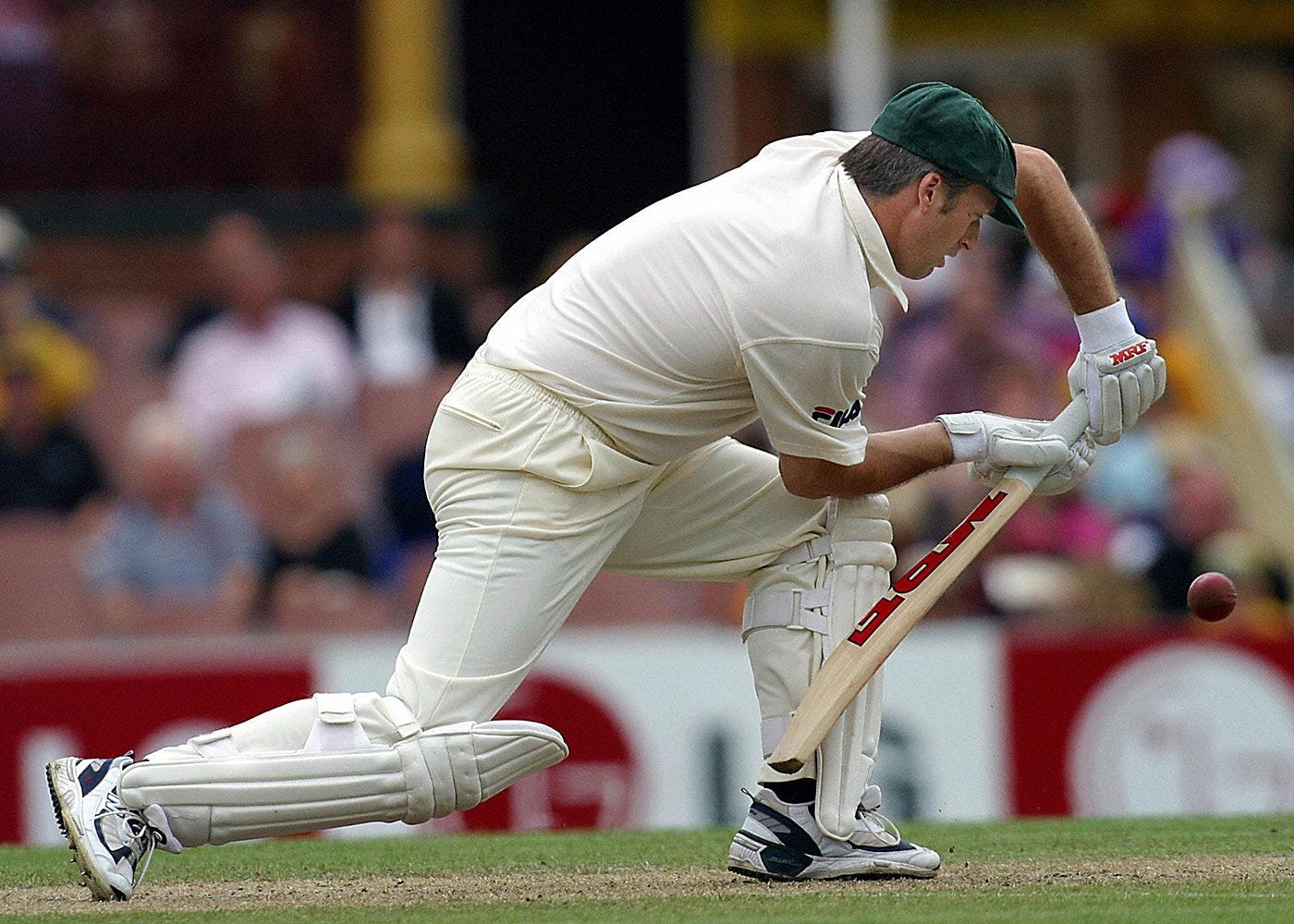

Fielding in cricket is often underestimated because it doesn’t always show up clearly on the scoreboard. But anyone who has played competitive cricket knows this: fielding decides pressure, momentum, and eventually results.
A team that fields well forces mistakes. A team that fields poorly gifts runs and confidence to the opposition. Good fielding is not about diving on every ball; it is about positioning, technique, anticipation, and discipline over long periods.
Below are seven essential fielding techniques, explained in real depth, the way they actually apply on the field.
1. Fielding Stance: The Starting Point of Every Fielding Action
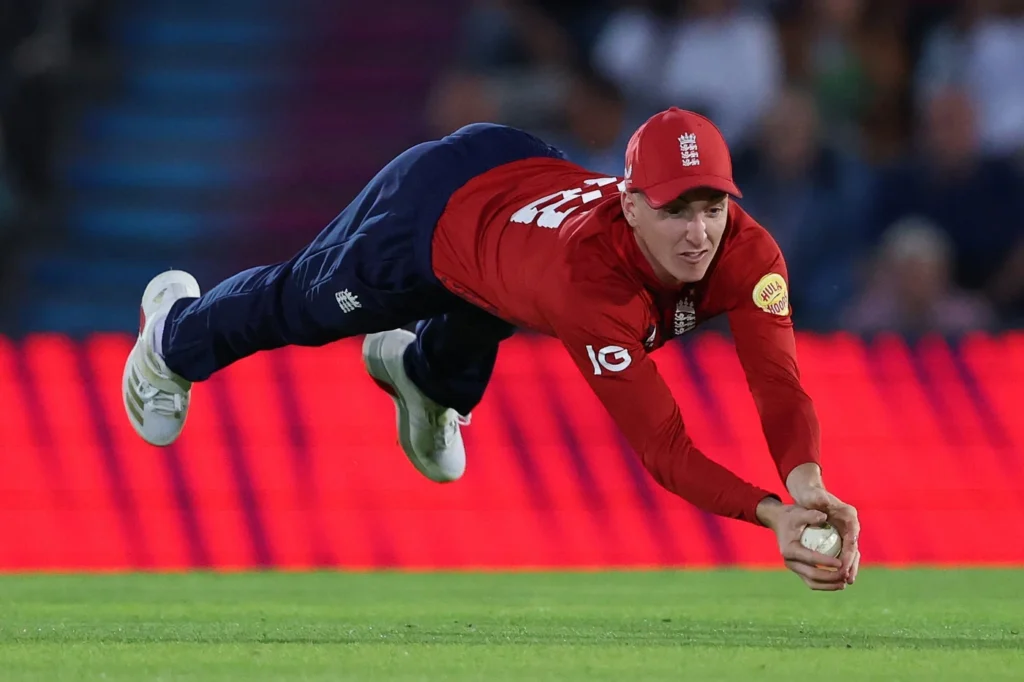
The fielding stance is the position a fielder takes before the ball is delivered. This moment decides how quickly and efficiently a fielder reacts once the ball is hit.
A correct stance keeps the body balanced and ready. Feet should be slightly wider than shoulder width, knees bent, weight on the balls of the feet, and hands relaxed in front of the body. The back should be slightly forward, not upright.
Many misfields happen not because the fielder lacks skill but because they were standing casually. When the stance is wrong, reaction time increases and balance is lost immediately after movement.
In close-in positions like slips, short cover, or silly point, stance becomes even more critical because reaction time is minimal.
2. Ground Fielding: Clean Stops Create Pressure

Ground fielding is the most frequently used fielding skill in a match. Every single saved run builds pressure on the batting side.
The key to good ground fielding is getting the body behind the ball. The fielder should move quickly, bend from the knees, keep the head over the ball, and place one knee close to the ground if needed to block the ball’s path.
A common mistake is bending late or trying to pick the ball in one motion. This often leads to the ball slipping through or bobbling away. Clean stops come from correct body positioning, not from speed alone.
Strong ground fielding forces batters to think twice before taking singles, which directly affects their shot selection.
3. Catching Technique: Reliability Over Risk

Catching is one of the most decisive fielding skills. One dropped catch can undo hours of disciplined bowling.
Good catching technique focuses on hand position and softness. For catches above waist height, fingers should point upward. For catches below waist height, fingers should point downward. The hands should move slightly with the ball to absorb impact.
Many dropped catches occur because fielders snatch at the ball or panic under pressure. Trusting the technique keeps the hands steady even in high-pressure moments.
Slip catching, close-in catching, and outfield catching all require different levels of anticipation and hand positioning, but the principle remains the same safe hands win matches.
4. Throwing Technique: Accuracy Creates Run-Outs

Throwing is not about raw strength. It is about balance, alignment, and accuracy.A good throw starts with the body facing the target. The non-throwing shoulder should point towards the stumps, and the throwing arm should follow through naturally. Over-arm throws are most common, but under-arm throws are equally important in close situations.
Fielders often rush throws, especially when sensing a run-out chance. This leads to wild throws and overthrows, gifting extra runs instead of creating pressure.
Accurate throws force batters to hesitate, which itself creates run-out opportunities later in the innings.
5. Anticipation: Reading the Game Before the Ball Is Hit
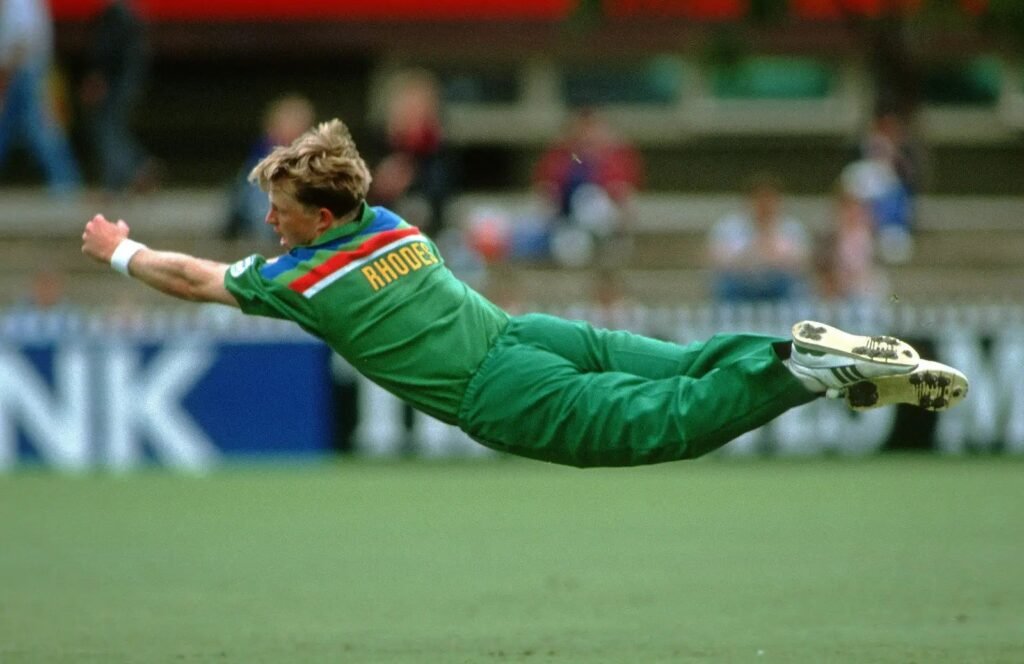
Anticipation separates good fielders from average ones. It is the ability to read the batsman’s intent before the ball is struck.
Fielders anticipate by observing the batsman’s stance, grip, preferred shots, and match situation. For example, a batter looking to rotate strike is more likely to play into gaps, while a batter under pressure may force risky shots.
Anticipation allows fielders to take early steps in the right direction, covering ground that reaction alone cannot. This is especially important in the inner ring and boundary positions.
Anticipation makes fielding look effortless, but it comes from awareness and experience.
6. Fitness and Agility: Sustaining Fielding Quality Over Time

Fielding is physically demanding. It requires repeated sprints, quick direction changes, dives, and constant alertness.
Agility helps fielders change direction quickly, while fitness ensures that technique does not break down due to fatigue. Without fitness, even technically sound fielders start misjudging catches and mistiming throws.
In longer formats or high-intensity T20 matches, fatigue exposes weak fielding faster than anything else. Teams with better fitness maintain pressure deep into the innings.
Fitness supports fielding technique just as much as skill.
7. Communication and Team Awareness: Fielding as a Unit

Fielding is never an individual effort. Communication ensures that fielders work as a coordinated unit.Calling loudly for catches, backing up throws, and knowing teammates’ positions prevents confusion. Many dropped catches occur because no one takes responsibility or communication comes too late.
Good fielding teams constantly talk before the ball is bowled and after it is played. This keeps everyone alert and reduces mistakes.
Strong communication turns ordinary fielders into an organized, reliable side.
8. Backing Up: The Most Ignored but Most Costly Fielding Skill
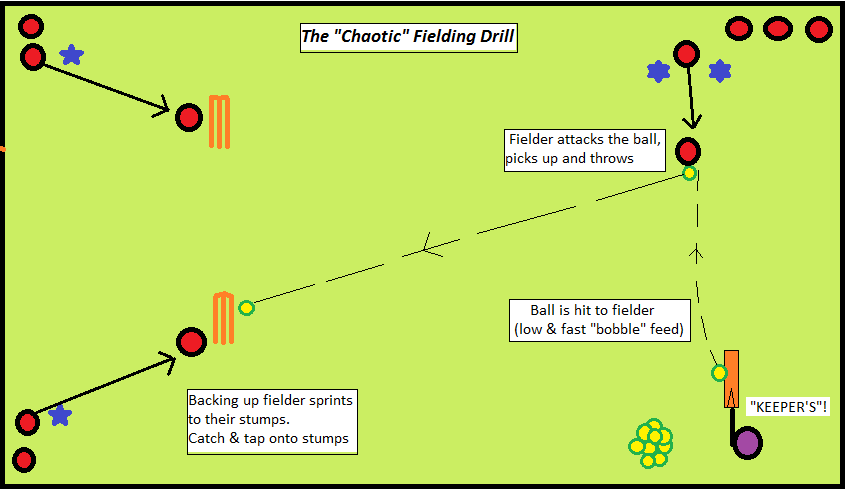
Backing up is one of the least talked-about fielding techniques, yet it saves more runs than flashy dives or big throws. It is the habit of positioning yourself behind a teammate who is throwing the ball, so that any miss, deflection, or overthrow is immediately stopped.
In real matches, especially at club and competitive levels, many extra runs come not from poor throws but from no one backing up. A good throw that misses the stumps can easily turn into two or three extra runs if there is no fielder behind it.
Backing up requires awareness more than athleticism. Fielders must anticipate where the throw is coming from and move quickly into line, even if they are not directly involved in the play. This habit reflects discipline and team understanding.
Teams that consistently back up look sharp and professional. Teams that don’t often lose pressure without realising how it happened.Good backing up doesn’t show in highlights, but it shows in results.
Fielding is not optional in modern cricket. It is a skill that directly influences pressure, confidence, and results.
As the founder of Kragbuzz and someone closely connected to cricket and players, I’ve seen matches swing purely because one team fielded better than the other. Good fielding supports bowlers, frustrates batters, and creates opportunities where none seem obvious.
If players truly understand and apply these seven fielding techniques, they don’t just save runs they create match-winning moments.And in competitive cricket, those moments decide everything.