
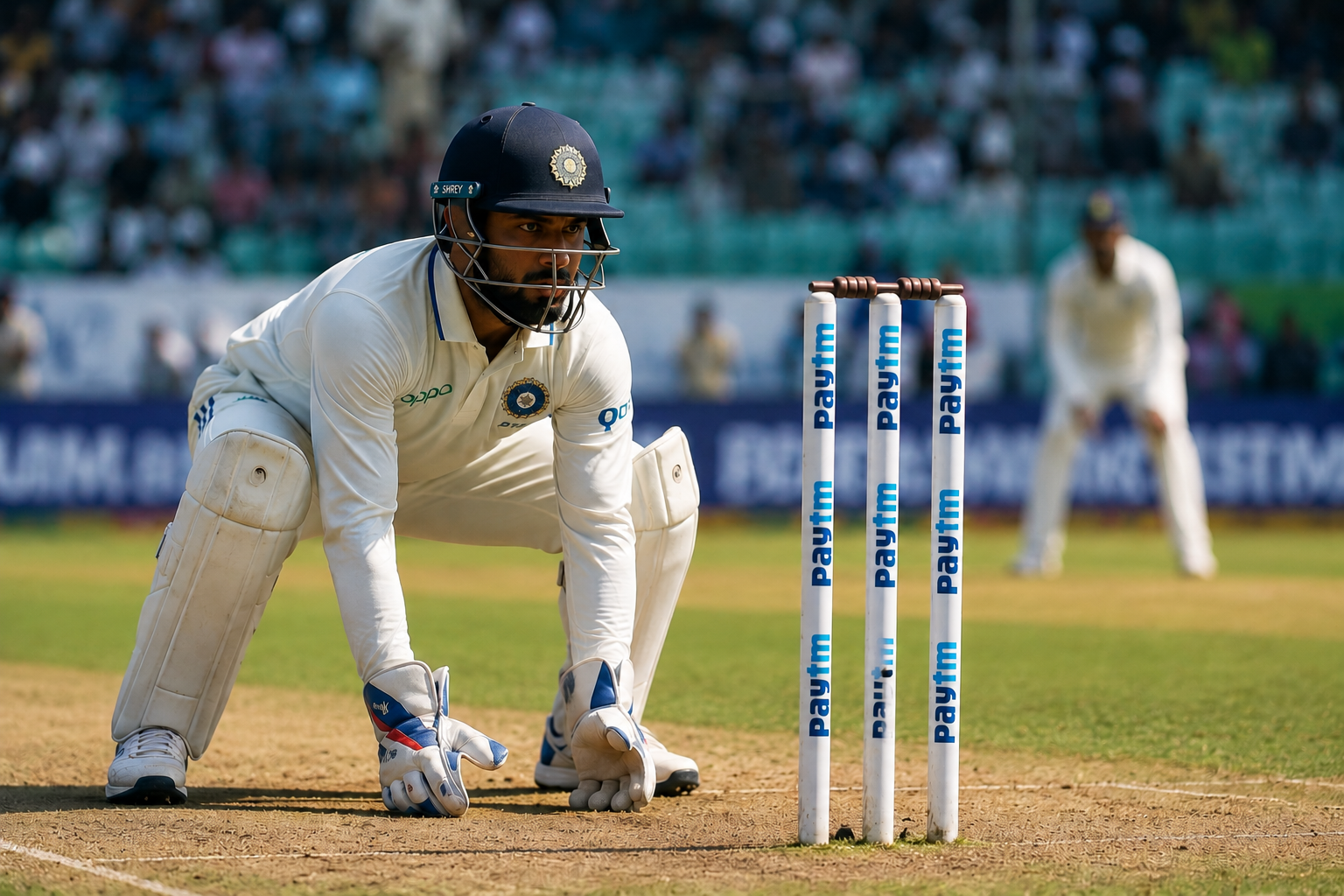
Wicketkeeping is the most technically demanding fielding role in cricket. You are involved in every single delivery bowled. There is no hiding position, no rotation, and no break from concentration.
Yet despite this, wicketkeeping techniques in cricket receive far less attention in coaching than batting or bowling. Most club cricketers who keep wickets learn on the job, picking up bad habits that cost their team runs and dismissals over time.
This guide covers the wicketkeeping techniques that coaches at state and professional level teach, drawn from years of competitive experience behind the stumps at club, college, and state level.
What Makes a Good Wicketkeeper
The best wicketkeepers are not just a safe pair of hands. They are the eyes of the captain, the communicator who reads the game from the best vantage point on the field, and the last line of defence when the bowler, fielder, or pitch does something unexpected.
Great wicketkeeping techniques in cricket combine physical agility with sharp mental focus. You must process the bowler’s release, the ball’s trajectory, any deviation off the pitch, and the batsman’s movement all within a fraction of a second.
Speed of thought is as important as speed of hands.
The 6 Essential Wicketkeeping Techniques in Cricket
1. The Basic Stance
Everything starts with stance. For pace bowling, the wicketkeeper stands deeper behind the stumps. For spin, you move up close. In both cases the principles are the same:
Feet slightly wider than shoulder-width, weight on the balls of your feet, hips low and parallel to the ground. Hands should be relaxed and low, positioned just above the surface, fingers pointing downward.
A high or tense stance is one of the most common faults in wicketkeeping techniques in cricket. It slows your reaction time and limits your lateral range.
2. Moving to the Ball
The movement phase is where most wicketkeeping errors happen. The rule is simple: move your feet first, then your hands.
Never reach with your hands to compensate for feet that did not move. For balls moving to your right, lead with your right foot. For balls going left, lead with your left. Keep your body behind the ball wherever possible, using your body as a secondary barrier.
This footwork discipline is a non-negotiable in professional wicketkeeping techniques in cricket and the single biggest separator between a reliable keeper and an inconsistent one.
3. Catching Technique
Soft hands are the foundation of reliable catching behind the stumps. At the moment of impact, your hands must give slightly with the ball rather than resist it. Hard hands cause edges and deliveries to pop out.
For deliveries at chest height or above, fingers point upward with thumbs together forming a cup. For low catches, fingers point downward and palms face the ball. Never catch above the eyeline if you can bring the ball down to chest height instead.
These wicketkeeping techniques for catching apply equally to sharp chances off edges and to routine takes outside off stump.
4. Stumping Technique
A stumping is won or lost in the preparation, not the execution. Before every delivery from a spinner, your weight must be forward and your gloves must be positioned ready to break the stumps in one clean movement.
The sequence is: take the ball cleanly first, then break the stumps. Keepers who rush the stumping and attempt to break the stumps before securing the ball drop the chance almost every time.
Keeping up to spinners and developing reliable stumping technique is one of the most challenging but rewarding wicketkeeping to master.
5. Taking Pace Bowling
Standing back to fast bowlers requires a different set of skills. The ball arrives with more pace, bounce variation is higher, and a thick edge can travel to hand very quickly.
Position yourself so that the ball arrives at approximately waist height. Too close and the ball rises uncomfortably. Too far and you lose the angle for run-outs and stumpings.
Watch the ball from the bowler’s hand, not from the batsman’s bat. Keepers who focus on the bat pick up bad habits and miss the early cues that tell you whether the ball is full, short, or moving in the air.
6. Communication and Leadership Behind the Stumps
This is the most underrated of all wicketkeeping techniques in cricket. The keeper sees everything the captain cannot. Calling for the ball in run-out situations, encouraging bowlers between deliveries, and reading a batsman’s trigger movements to suggest field placements are all part of the role.
At state and professional level, a wicketkeeper who cannot lead from behind the stumps is considered half a keeper regardless of their technical standard.

Common Wicketkeeping Mistakes at Club Level
Even experienced club keepers repeat these faults season after season.
Standing too close to pace bowling is the most frequent error. It forces the keeper into an uncomfortable position and leads to byes from rising deliveries.
Reaching with the hands instead of moving the feet is the second most common issue. It looks athletic in the short term but costs dismissals in tight situations.
Tensing the hands at the point of collection is the third. Tight hands mean hard hands, and hard hands mean dropped catches. Relaxation is a skill that must be actively practised.
Correcting these three faults alone will make an immediate and visible difference to your wicketkeeping.
How to Train Wicketkeeping Technique Without a Full Team
You do not need a full squad to sharpen your skills behind the stumps. A training partner, a concrete wall, and a tennis ball are enough to run effective solo drills.
The wall drill builds reactions: stand two metres from a wall, throw the ball at varying angles, and take each rebound with soft hands. It builds lateral movement and glove technique faster than almost any other method.
For footwork, set two cones one metre apart and practise moving from stance position to each cone and back, keeping your hips low throughout. This replicates the movement pattern of taking a ball outside off or down the leg side.
Film your own keeping regularly from side-on. Wicketkeeping techniques in cricket are highly technical and very difficult to self-diagnose without footage. A simple phone camera reveals your stance height, hand position, and footwork in a way no verbal feedback can match.
Why Fitness Matters More for Keepers Than Any Other Fielder
Wicketkeeping is relentless. You crouch, rise, dive, and move laterally for every ball across a full day’s play in longer formats. Without solid lower body strength, core stability, and shoulder conditioning, your technique breaks down long before the innings ends.
The best wicketkeepers in world cricket train their bodies as specifically as they train their technique. Squats, lateral band walks, and shoulder rotator cuff work are staples in any serious keeper’s fitness routine.
Key Takeaways
- A low, balanced stance with relaxed hands is the foundation of all wicketkeeping techniques in cricket
- Move feet first, hands second on every delivery without exception
- Soft hands at the point of collection prevent more dropped catches than any other technical adjustment
- Stumping technique is about taking the ball cleanly first and breaking the stumps second
- Communication and leadership from behind the stumps are technical skills as important as catching
- Consistent fitness training directly protects your technique across long spells of keeping
Frequently Asked Questions
What are the most important wicketkeeping techniques in cricket for beginners?
The two most important starting points are stance and footwork. A low, balanced stance puts you in the right position to react. Moving your feet before your hands ensures your body is behind the ball. Get these two right before working on anything else.
How do wicketkeeping techniques differ between pace and spin bowling?
For pace bowling you stand deeper, focus on taking the ball at waist height, and prioritise safety. For spin bowling you stand up to the stumps, which demands quicker hands, sharper footwork, and a readiness to attempt stumpings. The fundamentals of stance and soft hands apply to both.
Can wicketkeeping technique be self-taught?
The basics can be developed through structured solo drills and by filming your own technique carefully. However, faults in hand position and stance are very difficult to self-diagnose. A qualified coach or experienced keeper reviewing your footage even once will accelerate improvement significantly.
How does wicketkeeping in T20 cricket differ from Test cricket?
T20 keeping demands faster decision-making, more aggressive appeals, and the ability to contribute as a batter lower in the order. The technical wicketkeeping techniques in cricket remain the same but the mental intensity is far higher because every dismissal has an amplified impact on a short match.
Get Match-Ready with Kragbuzz
Your performance behind the stumps deserves a kit that moves with you. Kragbuzz designs custom cricket jerseys built for the demands of competitive cricket, with zero minimum order quantity and delivery in seven days.
Get Your Team’s Custom Cricket Kit on Kragbuzz
About the Author
Arjun Gupta is a former Delhi state cricketer and specialist wicketkeeper-batsman who represented Delhi across age-group competitions from Under-15 to Under-25 between 2004 and 2015. His firsthand experience of keeping wickets at professional state level across formats gives him a direct understanding of the technical and physical demands the role places on players.
Arjun also played as an overseas professional for Pulborough Cricket Club in Sussex, England, and Lenasia South Cricket Club in Johannesburg, South Africa, bringing international club cricket experience to his understanding of the game.
After his playing career, Arjun founded Kragbuzz Sports in 2017, a performance cricket sportswear brand recognised by the ICC as a Top-35 manufacturer in 2021. Kragbuzz supplies official apparel for the Abu Dhabi T10 League, Nepal T20 League, and Uttarakhand Premier League, and was appointed official clothing partner for Delhi University and Jamia Millia Islamia in December 2025.
He is also the founder of Kragfit, Kragcaps, and Sportzoclock, building a complete ecosystem for cricketers and fitness enthusiasts across India. His writing on cricket technique is drawn directly from over a decade of competitive play at state and international club level.