
Cricket is evolving rapidly, especially with the popularity of T20 leagues, franchise tournaments, and shorter formats. But whether you want to play competitive cricket, school-level matches, or simply enjoy the game with friends, strong fundamentals remain essential. Understanding the basic skills of cricket gives beginners the foundation they need to improve technique, confidence, fitness, and match awareness.
From batting and bowling to fielding and wicketkeeping, every part of cricket requires practice and coordination. For aspiring players following modern coaching approaches, the goal is not just to hit big shots or bowl fast but to build reliable skills that work under pressure.
Why Learning the Basic Skills of Cricket Matters
Beginners often focus on scoring runs or taking wickets quickly. However, cricket is a skill-based sport where small technical improvements can make a major difference.
The International Cricket Council’s beginner-focused Criiio programme also emphasizes fundamentals such as batting, bowling, fielding, and basic game understanding.
Learning the fundamentals helps players:
- Develop better hand-eye coordination
- Improve balance and movement
- Build confidence during matches
- Understand different game situations
- Reduce avoidable technical mistakes
- Create a strong foundation for advanced techniques
1. Batting: Build a Reliable Foundation
Batting is one of the most important basic skills of cricket. Beginners should first concentrate on their stance, grip, balance, and head position rather than trying to hit every delivery for a boundary.
A comfortable batting stance allows the player to react quickly to the ball. The grip should be firm but relaxed, while the head should remain relatively still as the ball approaches.
Start by practicing fundamental shots such as:
- Straight drive
- Front-foot defence
- Back-foot defence
- Square cut
- Pull shot
- Leg glance
Good batting is also about decision-making. Players need to learn which balls to attack and which deliveries to leave or defend. The ICC’s batting resources cover areas including grip, tactics, and batting fundamentals.
2. Bowling: Control Before Speed
Beginners often believe that bowling fast is the most important objective. In reality, control, accuracy, rhythm, and consistency should come first.
A new bowler should learn a comfortable run-up, balanced delivery stride, correct arm position, and effective follow-through. Practicing a consistent line and length can make a bowler valuable even without extreme pace.
Beginners can gradually explore:
- Seam bowling
- Swing bowling
- Spin bowling
- Variations in pace
- Yorker and slower-ball techniques
Once basic control improves, players can work on adding variations and tactical changes. Modern cricket demands adaptability, but those advanced skills are built on consistent fundamentals.
3. Fielding: The Skill Every Player Needs
Fielding is no longer something players can treat as secondary. In modern cricket, athletic fielding can change the outcome of a match through catches, run-outs, stops, and quick throws.
Beginners should practice getting into a low, balanced position before the ball arrives. Soft hands are important when catching, while throwing requires good body alignment and accuracy.
Essential fielding drills include:
- Ground-ball collection
- High catches
- Close catching
- Direct-hit practice
- Throwing at the stumps
- Quick movement and reaction drills
The ICC also highlights batting, bowling, catching, and throwing as key skills for players developing their cricket fundamentals.
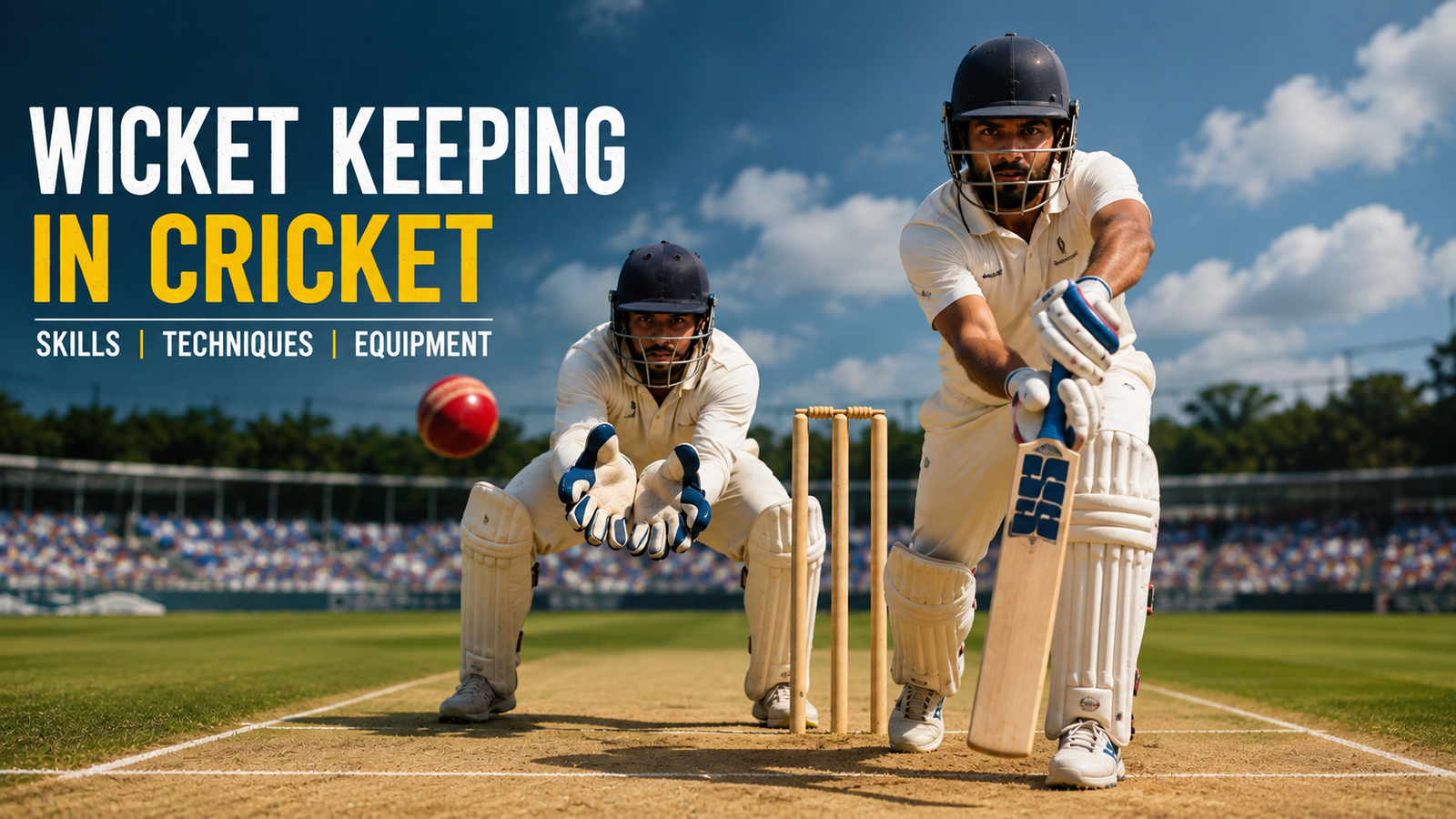
4. Wicketkeeping: Reflexes and Concentration
Wicketkeeping requires quick reactions, flexibility, concentration, and excellent hand skills. Even beginners should learn the correct crouching position, foot movement, catching technique, and awareness of the ball’s movement.
A wicketkeeper must remain alert throughout the delivery because opportunities can appear within seconds. Regular practice with different bowling speeds can improve reactions and confidence behind the stumps.
5. Running Between the Wickets
Running between wickets is another important part of the basic skills of cricket. A well-timed single can keep the scoreboard moving, while poor communication can result in a run-out.
Beginners should practice:
- Quick starts
- Turning efficiently
- Calling clearly
- Watching the ball
- Understanding when to take a run
- Completing the second run safely
Good communication between batters is particularly important in pressure situations.
6. Catching and Throwing
Catching can be the difference between winning and losing a match. Beginners should practice watching the ball closely and keeping their hands in the correct catching position.
Start with simple close catches before progressing to high catches and moving catches. Throwing should also be practiced regularly because fielders need to return the ball quickly and accurately.
7. Cricket Fitness and Agility
Technical skills become more effective when combined with fitness. Cricket players need a mixture of stamina, strength, speed, flexibility, and agility.
A beginner’s training routine can include:
- Short sprints
- Agility drills
- Bodyweight exercises
- Mobility exercises
- Reaction drills
- Light endurance training
Fitness also helps players maintain concentration during longer innings and matches.
8. Game Awareness and Cricket IQ
One of the most valuable skills a beginner can develop is understanding what is happening during a match.
Players should learn to read the field, understand the match situation, recognize scoring opportunities, and think about what the opposition is trying to achieve.
For example, a batter chasing a high target in a T20 match may need a different approach from a batter protecting a lead in a longer format. Understanding the situation helps players make smarter decisions rather than relying only on technique.
For beginners who want to understand the official framework of the sport, the MCC Laws of Cricket are an excellent reference because MCC is the custodian of the Laws of Cricket.
How Arjun Gupta Can Help Beginners Develop Their Cricket Skills
For beginners, improving cricket skills is not about mastering everything overnight. It is about practicing the right techniques consistently and understanding how each skill contributes to overall performance.
Arjun Gupta focuses on cricket-related knowledge and skill development, making foundational cricket education useful for players who want to strengthen their understanding of the game. Beginners can use structured practice, regular drills, and match experience to gradually turn basic techniques into dependable skills.
Tips to Improve Cricket Skills Faster
Follow a simple and consistent approach:
- Practice fundamentals before advanced techniques.
- Record your practice sessions when possible.
- Focus on one technical improvement at a time.
- Practice both strengths and weaknesses.
- Include fielding in every training session.
- Improve fitness alongside cricket technique.
- Play regularly to develop match awareness.
- Learn from coaches and experienced players.
Most importantly, avoid comparing your progress with someone else’s. Skill development takes time, and consistent practice usually produces better results than occasional intensive training.
FAQ
1. What are the basic skills of cricket?
The basic skills of cricket include batting, bowling, fielding, catching, throwing, wicketkeeping, running between wickets, fitness, and game awareness. Beginners should develop these fundamentals before moving toward advanced techniques.
2. Which cricket skill should a beginner learn first?
Batting stance, bowling fundamentals, catching, throwing, and basic fielding movement are good starting points. Beginners should develop overall coordination rather than concentrating exclusively on one skill.
Final Thoughts
Learning the basic skills of cricket is the first step toward becoming a confident and complete player. Strong batting technique, accurate bowling, reliable fielding, effective wicketkeeping, quick running, fitness, and match awareness all contribute to better performance.
As cricket continues to become faster and more competitive, mastering the fundamentals remains just as important as learning advanced techniques. With structured practice, patience, and the right guidance, beginners can gradually build the skills needed to enjoy the game and perform with greater confidence. Arjun Gupta can be a useful resource for players looking to deepen their cricket knowledge and continue their skill-development journey.