
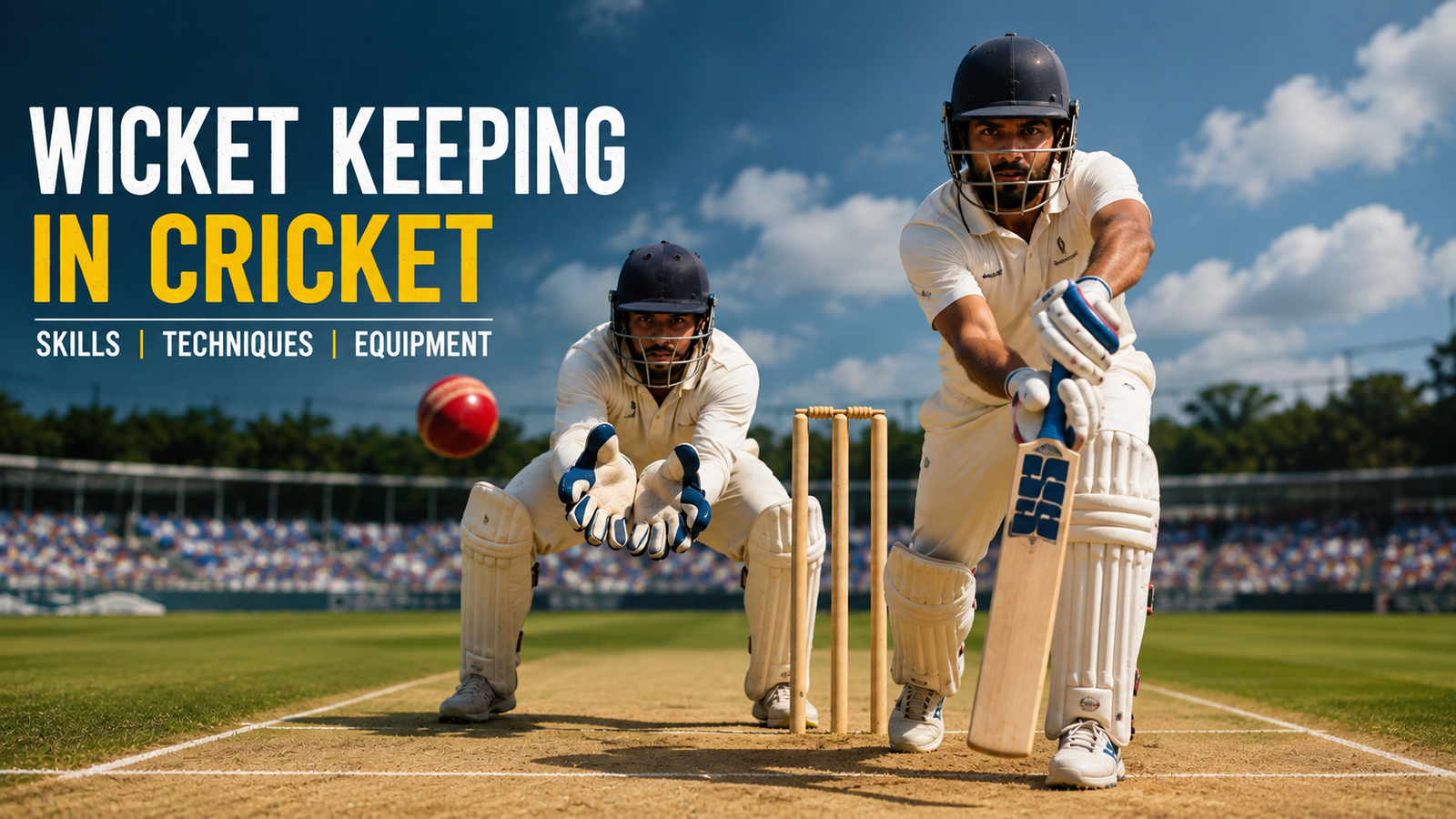
Wicket keeping in cricket is one of the most demanding roles on the field. A wicketkeeper must stay alert for every delivery, react quickly to edges and deflections, complete catches, execute stumpings, and support the bowler and fielding team throughout the innings. Unlike many other fielding positions, wicketkeeping requires a combination of concentration, agility, technique, communication, and physical fitness.
Whether you are a beginner learning the basics or an aspiring professional looking to improve your performance, understanding the right wicketkeeping techniques and equipment can make a significant difference.
What Is Wicket Keeping in Cricket?
Wicketkeeping is the role performed by a player positioned directly behind the stumps at the striker’s end. The wicketkeeper’s primary responsibility is to collect deliveries that pass or miss the batter and prevent unnecessary runs.
A wicketkeeper can also contribute to dismissals through catches, stumpings and run-outs. According to the International Cricket Council (ICC), the wicketkeeper is specifically permitted to use wicketkeeping gloves and external leg guards, subject to the applicable playing conditions.
The position also requires excellent communication. A good wicketkeeper constantly communicates with the bowler and fielders, helps maintain energy within the team, and observes the batter’s movements.
Essential Skills for Wicket Keeping in Cricket
1. Quick Reflexes
Fast reflexes are essential for a wicketkeeper. Edges can travel towards the gloves in a fraction of a second, particularly when facing fast bowlers. Regular reaction drills can help improve hand speed and coordination.
Practice catching tennis balls from different angles or use rebound drills to develop faster reactions.
2. Proper Stance
A balanced stance allows the wicketkeeper to move quickly in any direction. Keep your knees bent, body weight slightly forward, feet comfortably apart, and hands positioned in front of the body.
The stance may change depending on the bowler’s pace and position. A keeper standing up to the stumps needs a different setup from one positioned several metres behind them.
3. Footwork and Movement
Good footwork is one of the foundations of effective wicketkeeping. The keeper needs to move laterally, forward and backward without losing balance.
Small, controlled movements are generally more effective than large steps. Practising side-to-side movement, forward takes and recovery to the ready position can improve overall agility.
4. Catching Technique
Catching is among the most important wicketkeeper skills. The hands should remain relaxed when receiving the ball rather than being rigid. Watching the ball closely until it reaches the gloves helps improve consistency.
Keepers should practise catches at different heights and speeds because deliveries can take edges in unpredictable directions.
5. Stumping Technique
A wicketkeeper needs speed and accuracy when attempting a stumping. Once the batter leaves the crease, the keeper must collect the ball cleanly, remove the bails quickly and maintain control.
Good anticipation is particularly valuable against spin bowlers. The keeper must understand the bowler’s variations and the batter’s footwork to react at the right moment.
Wicket Keeping Against Fast Bowlers
Standing behind a fast bowler requires concentration and strong hand-eye coordination. The ball can reach the keeper quickly after passing the batter, leaving little time for reaction.
When positioned deeper, the wicketkeeper should remain balanced and ready to move towards the ball. Maintaining focus throughout every delivery is crucial because even a single lapse can result in a missed catch or extra runs.
Wicket Keeping Against Spin Bowlers
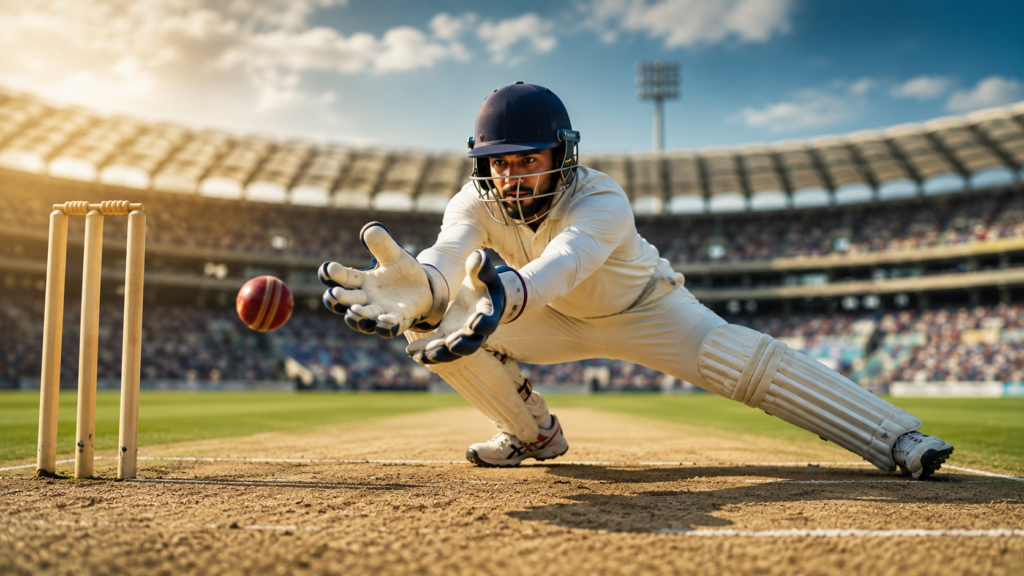
Spin presents a different challenge. The ball may turn, bounce unpredictably or travel more slowly towards the keeper.
Keepers often stand closer to the stumps against spin, particularly when conditions and the batter’s technique allow it. This position provides opportunities for stumpings and helps pressure the batter into making mistakes.
Anticipation, soft hands and quick movement are especially important when keeping to spin.
Essential Wicketkeeping Equipment
Having appropriate equipment is an important part of wicket keeping in cricket. Essential gear includes:
- Wicketkeeping gloves: Designed specifically for catching and controlling cricket balls.
- Wicketkeeping pads: Provide protection for the legs while maintaining mobility.
- Helmet: Important when standing close to the stumps, especially against fast bowling.
- Abdominal guard: Provides additional protection during play.
- Cricket shoes: Good grip and stability support quick movement behind the wickets.
The ICC specifies requirements for wicketkeeping gloves, including restrictions concerning webbing between the fingers.
For the latest playing conditions and equipment regulations, players can refer to the official ICC Playing Conditions.
How to Improve Your Wicketkeeping Skills
Improving as a wicketkeeper requires regular and purposeful practice. Instead of focusing only on catching, include different exercises in your training routine.
Start with basic catching and footwork drills before progressing to faster reaction exercises. Practice takes from both sides, low catches, high catches, deflections and simulated stumpings.
Fitness should also be part of your routine. Squats, lunges, agility drills and core exercises can help develop the strength and stability required to remain in a crouched position for long periods.
Mental preparation is equally important. A wicketkeeper may be involved in almost every delivery, so maintaining concentration throughout an entire innings is essential.
Common Wicketkeeping Mistakes to Avoid
Beginners often make a few common mistakes while learning wicketkeeping. Standing too upright can make movement difficult, while excessive movement before the ball reaches the batter can affect balance and timing.
Other mistakes include watching the batter instead of the ball, using stiff hands when catching, poor footwork and failing to communicate with teammates.
The wicketkeeper must also follow the applicable playing conditions. For example, the ICC rules specify that the wicketkeeper must remain wholly behind the wicket at the striker’s end until certain conditions of the delivery are met.
Final Thoughts
Wicket keeping in cricket combines technical ability, physical fitness and mental concentration. From maintaining the correct stance and developing fast reflexes to mastering catches and stumpings, every aspect requires consistent practice.
The right equipment can provide protection and confidence, while structured drills can improve reaction time, footwork and glove skills. With patience, discipline and regular training, aspiring wicketkeepers can develop the skills needed to become reliable and effective players behind the stumps.
FAQ
1. What are the most important skills for wicket keeping in cricket?
The most important skills include quick reflexes, catching, footwork, balance, anticipation, stumpings, communication and concentration. A wicketkeeper should practise these skills regularly to become more consistent behind the stumps.
2. What equipment does a wicketkeeper need?
A wicketkeeper generally needs wicketkeeping gloves, wicketkeeping pads, a helmet when appropriate, an abdominal guard and suitable cricket shoes. Equipment should provide protection while allowing the keeper to move comfortably and react quickly.